These projects refuse linearity. They don’t begin and end so much as surface, recede, and resurface—taking form through slow, recursive acts of making and thinking.
I have a forthcoming piece (expected 2026) which continues to explore the relationship between the drag scene and gentrification in San Diego, anchored by my archival research and historical excavation of the role San Diego’s anti-crossdressing ordinance played in its neoliberalization.
In 2022, I published reflections on the relationship between the drag scene and gentrification in San Diego, focusing on Blackness and queer urban geographies.
In 2019, I defended my Doctoral Dissertation The Social Politics of Queer Drag: A Study of San Diego Queer Community and Queercore Subculture, much of which was anchored by my work as an artist researcher.
Between 2018 and 2022, I collected oral histories from drag elders and contemporary performers reflecting on the history of the scene in San Diego. These interviews include stories of drag performers and trans women whose performing careers began in the 1970s, including the some of the first Black and Mexican drag performers in the city.
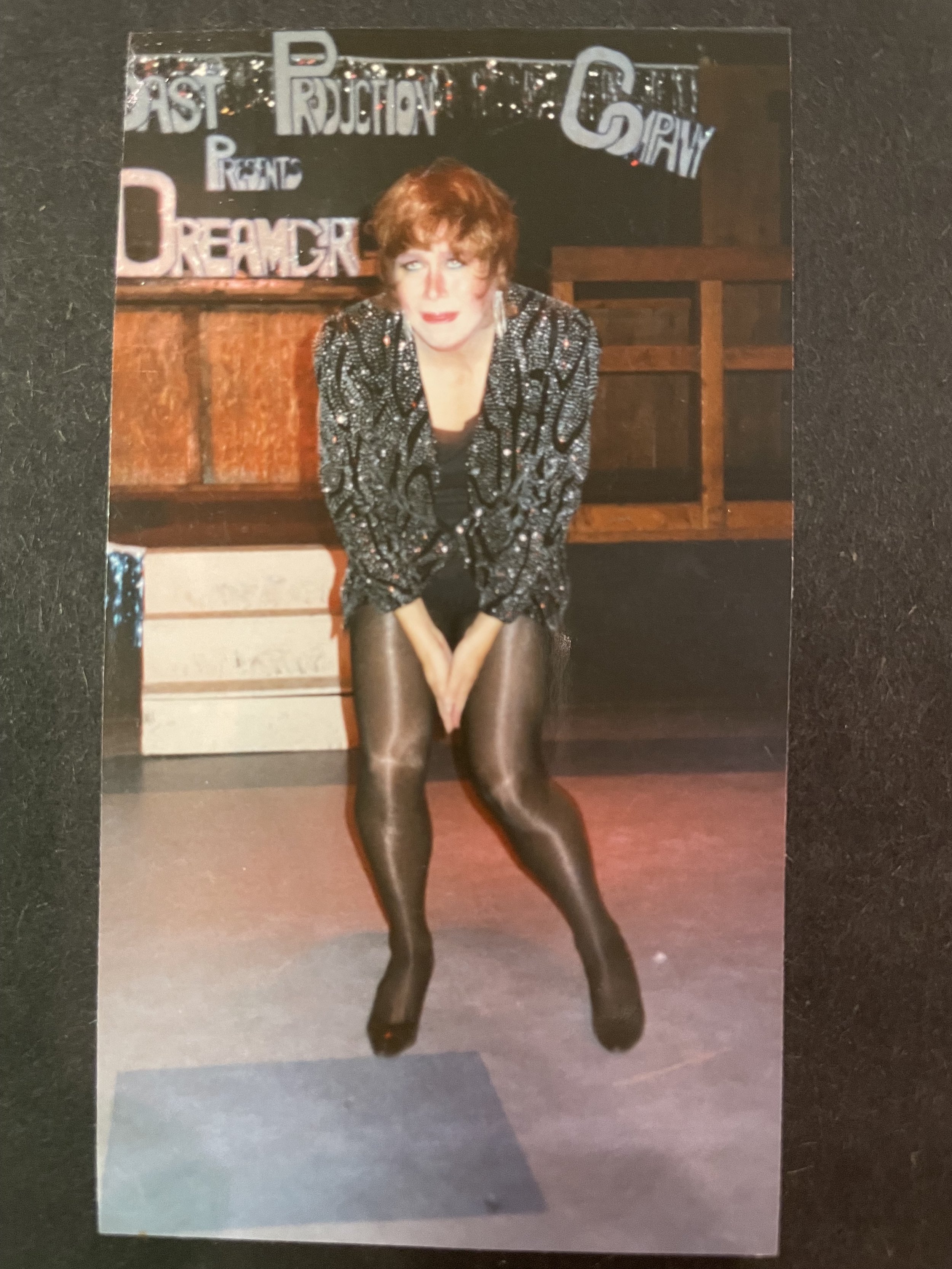
Jessie Taylor at the historic Dreamgirls Revue when it was hosted in a hidden venue near the airport.
I fleshed out this work with archival research into the history of San Diego’s drag scene and constructed a narrative which spanned from the late 60s to the present, including the diverse neighborhoods and venues which have hosted drag performance.
I continued to explore the labor dynamics of drag—interrogating what kinds of work are recognized as difficult or time-intensive, and how avant-garde artistry is valued in contrast to more commercial aesthetics. My ongoing participation as a performer increasingly situated me within the mainstream, commercial scene, which in turn became a method of inquiry into these questions.
I went on to perform at many of the historic venues that would later figure in my writing, embedding myself in a collaborative ethic where artists collectively took on the labor of documenting each other (a necessity for self-promotion in a scene driven by entrepreneurial actions).
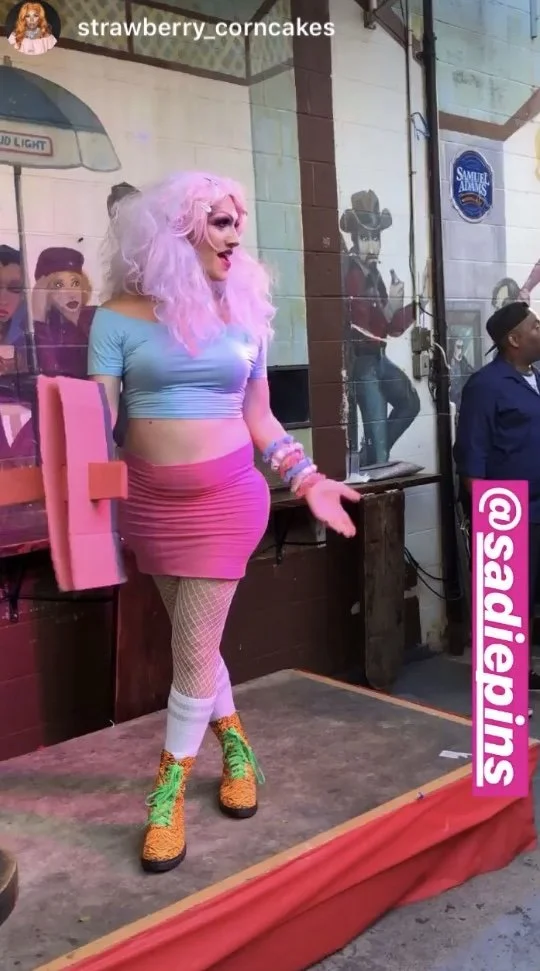
Sadie Pins at #1 on 5th, 2019

I also began to be involved in curating performances which included drag but also performance art, visual art, experimental film, and more. Is This A Reality Show helped launch Weird Hues, a gallery in Chula Vista specializing in border art.
Cruisy Fiction performs at Is This A Reality Show, 2018
Sadie Pins at Urban Mo’s, 2018
Soon after, I joined the scene as the performer Sadie Pins. I approached my work as an artist-researcher, treating performance as a site for exploring embodiment and identity through sound, choreography, and fashion. As I continued to perform, I was increasingly drawn to broader questions like the impact of the drag scene on gentrification in a border city and inner-scene dynamics surrounding labor negotiations.
Sienna Desire performs at The Rail, 2016
In 2016, I stepped up my involvement in the San Diego drag scene as a documentarian, capturing the rapid growth of the scene (in terms of performers, venues, visibility) as RuPaul’s Drag Race created an unprecedented interest in drag.